Grounded may earn a commission from links on this page. How this works
In Bolgatanga, in the Upper East Region of Northern Ghana, basket weaving among the Gurunsi people is not simply a craft. It is part of everyday life and tradition, and it has been for generations.
The Bolga baskets, as they are widely known, are woven from elephant grass using techniques passed down through generations, preserving knowledge refined within families and communities over time. Elephant grass is cultivated in savannah areas and brought to local markets where artisans source it for weaving. Before weaving begins, the material is carefully prepared through processes such as twisting, untwisting, dyeing and drying. This preparation is an essential part of the craft, shaping both the texture and identity of each basket.
In many Northern communities, communal life plays an important role, with people coming together to support one another during farming, building, funerals and other moments of need. That same spirit of togetherness extends into everyday work and creative practice. It is common to see women gathered outside their homes or beneath shade trees to weave together, turning the practice into a shared space where storytelling, collaboration and learning through observation sustain the craft. This cultural practice strengthens social bonds while ensuring continuity within the community.
Knowledge is transmitted through close observation and practice, with younger artisans learning by working alongside experienced weavers in shared spaces. Rather than formal instruction, skills are developed gradually through repetition, correction and participation in everyday making, allowing both technique and personal expression to evolve over time. Today, thousands of artisans across Bolgatanga continue this practice, with many households passing the skill to their children. For many women, farmers and young students, it is also a source of livelihood that helps support their families, education and daily needs.
What has allowed the craft to endure is not only its cultural significance, but also the dedication of the artisans who continue to practise and sustain it. Their craftsmanship deserves recognition not only for its beauty, but for the knowledge, skill and creativity it carries.
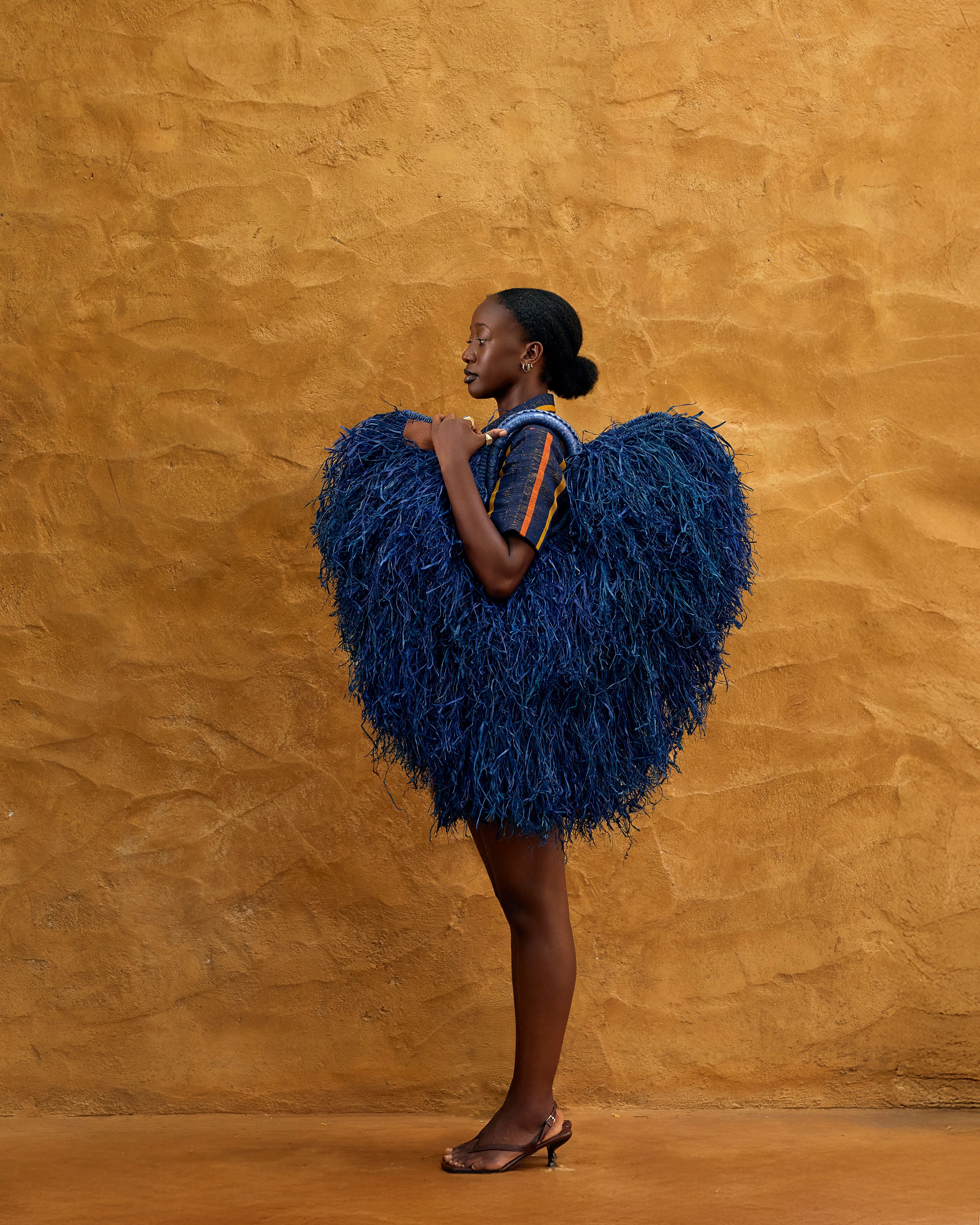
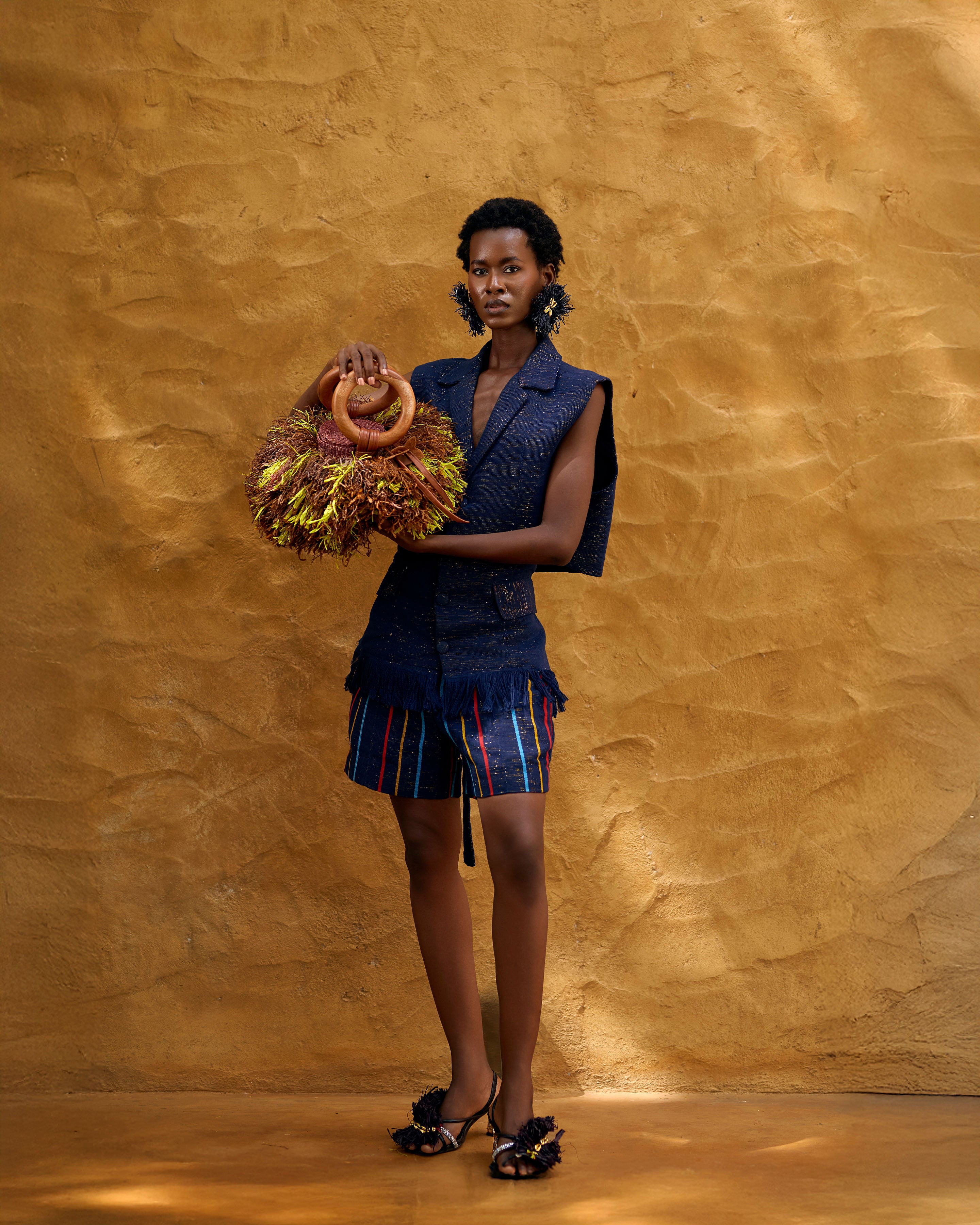
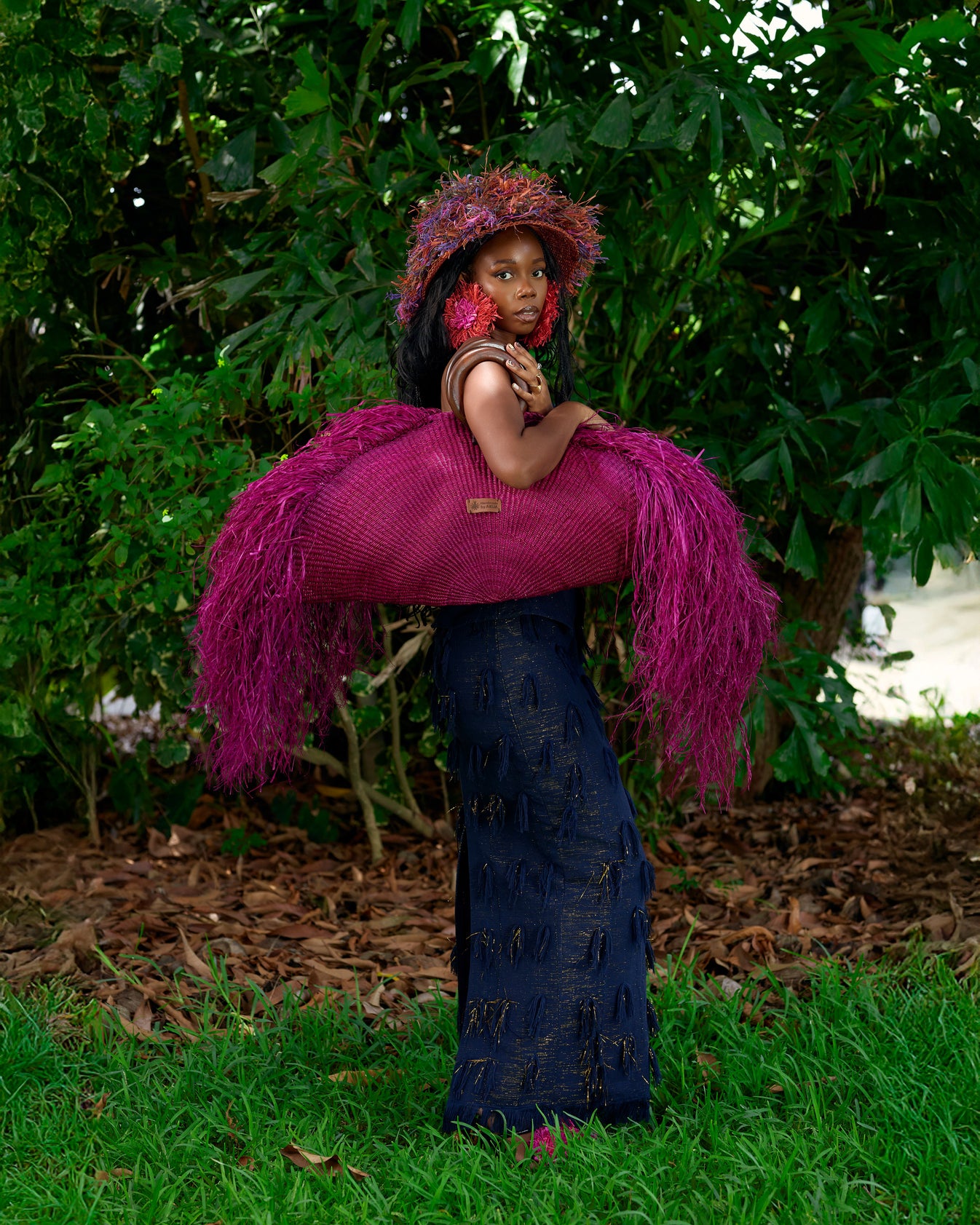
So when, after university and during COVID, I went through a quiet pause that brought me back to questions of purpose and the kind of work I wanted to create in the world, it was my connection to home and my deepening appreciation for traditional African craftsmanship and sustainable ways of living that led me to take what had always been part of my environment and reimagine it through the lens of contemporary fashion. Community, creativity and craftsmanship had shaped everyday life where I grew up, and that is what Handmade by Akua was built on. I saw a gap in how traditional basket bags were being represented, and I wanted to shift that narrative. My intention was to reimagine them as contemporary fashion pieces, positioning them within modern design spaces and elevating them from functional and decorative objects into statement pieces.
At the heart of Handmade by Akua are the artisans who keep this tradition alive. I work with approximately 23 women and 6 men artisans who rely on basket weaving to support their households and educate their children. For me, this work is about giving visibility to a craft that has long been part of Northern Ghana's cultural identity, while creating meaningful opportunities for the artisans whose work sustains it. My hope is that Ghanaian basket weaving continues to evolve without losing its authenticity, and that the communities that have preserved it for generations receive the recognition and support they deserve.
Through this work, I aim to build bridges between heritage and contemporary design, ensuring that the artisans behind this craft are seen, supported and empowered.